

In 2025, website support and maintenance services have become essential for every business, regardless of size or industry. As digital threats and user expectations continue to rise, neglecting website upkeep can expose companies to security breaches, unexpected downtime, and significant revenue loss.
Proactive website support and maintenance services not only safeguard your site but also enhance performance, security, and the overall user experience. A well-maintained website helps build trust, attracts more visitors, and supports your business goals.
This guide will show you everything you need to know about website support and maintenance services for 2025. Discover the key services, emerging trends, expert strategies, and proven best practices to keep your website healthy and future-ready.
What are website support and maintenance services?
Website support and maintenance services are essential for keeping your online presence safe, reliable, and effective. As websites grow more complex, these services ensure your site runs smoothly and remains secure against evolving threats. They cover a wide range of ongoing tasks that protect your investment, enhance user trust, and help your business stay competitive in the digital marketplace.
Definition and scope of services
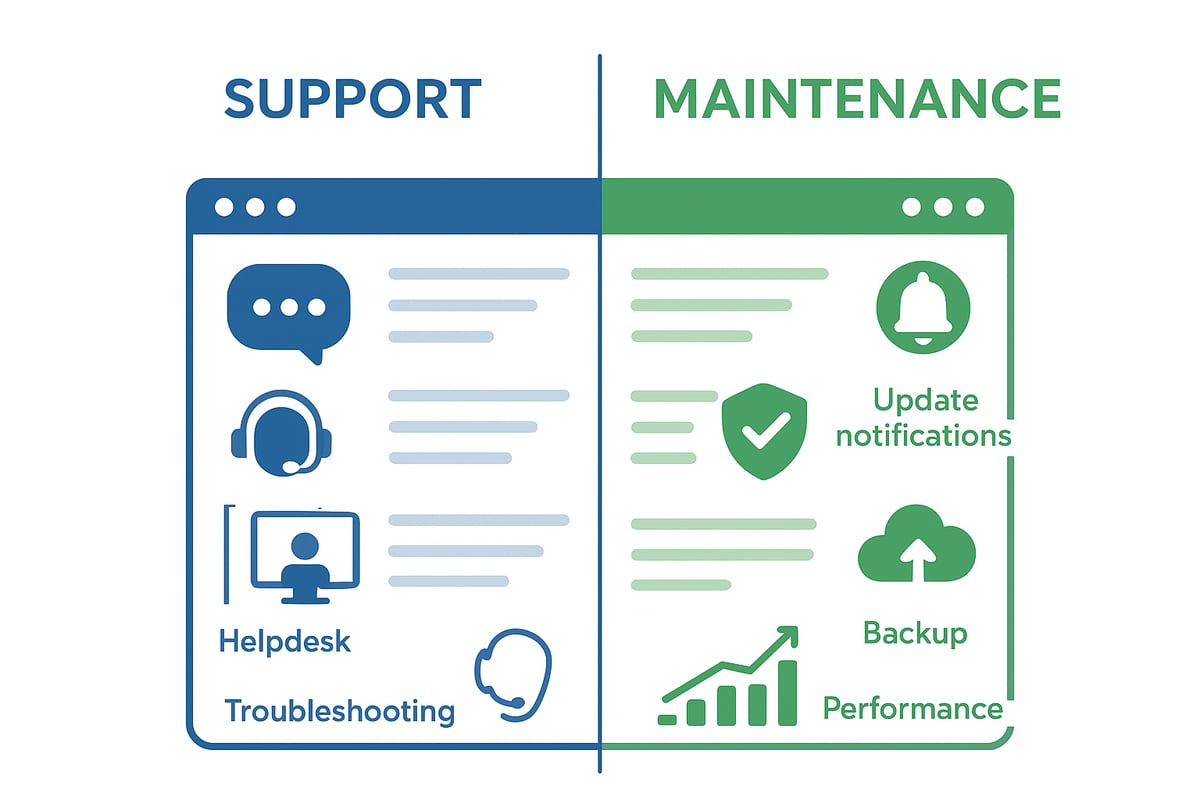
Website support and maintenance services cover all the activities required to keep a website up to date, secure, and functioning as intended. Support typically includes helpdesk assistance, troubleshooting errors, and addressing user issues. Maintenance, by contrast, focuses on regular updates, performance checks, and preventive measures.
Both support and maintenance are critical for ongoing website health. Without them, sites quickly become vulnerable to security risks, performance bottlenecks, and operational issues. In 2025, having clear processes for both elements is no longer optional for any business with an online presence.
Core components of support and maintenance
The core components of website support and maintenance services include several routine but vital tasks:
- Scheduled backups to protect data against loss or corruption
- Software, plugin, and content management system (CMS) updates to patch vulnerabilities
- Continuous security monitoring and prompt vulnerability patching
- Performance optimisation through speed tests and uptime monitoring
- Technical support and rapid troubleshooting for unexpected issues
These components work together to minimise risks, keep your site running efficiently, and provide a seamless experience for users. Regular attention to each area helps businesses avoid costly disruptions.
Types of websites requiring support
Website support and maintenance services are crucial for all types of websites, including e-commerce platforms, business sites, blogs, and membership portals. Each site type faces unique challenges. E-commerce sites, for example, stand to lose significant revenue during downtime, with estimates suggesting e-commerce sites losing £3.4 million per hour during downtime.
High-traffic or business-critical sites demand even more rigorous support and maintenance. These websites cannot afford performance issues or security lapses, as both can lead to lost sales, damaged reputation, or regulatory penalties.
In-house vs outsourced services
Deciding whether to manage website support and maintenance services in-house or outsource them depends on several factors. In-house teams offer direct control and potentially faster response times, especially if you have the necessary expertise on staff. However, building an internal team can be costly and resource-intensive.
Outsourcing to specialised providers delivers access to broader expertise, advanced tools, and scalable solutions. It is often more cost-effective for small to medium enterprises. The decision should consider business size, technical complexity, budget, and long-term growth plans.
Key benefits for businesses
Partnering with the right website support and maintenance services offers several key advantages:
- Improved security and data protection
- Reduced downtime and faster issue resolution
- Enhanced SEO performance and search visibility
- Better user experience and accessibility
Real-world data shows the stakes are high: 60% of SMEs that suffer a cyberattack close within six months, highlighting the critical importance of proactive website maintenance and support.
Essential website support and maintenance tasks for 2025
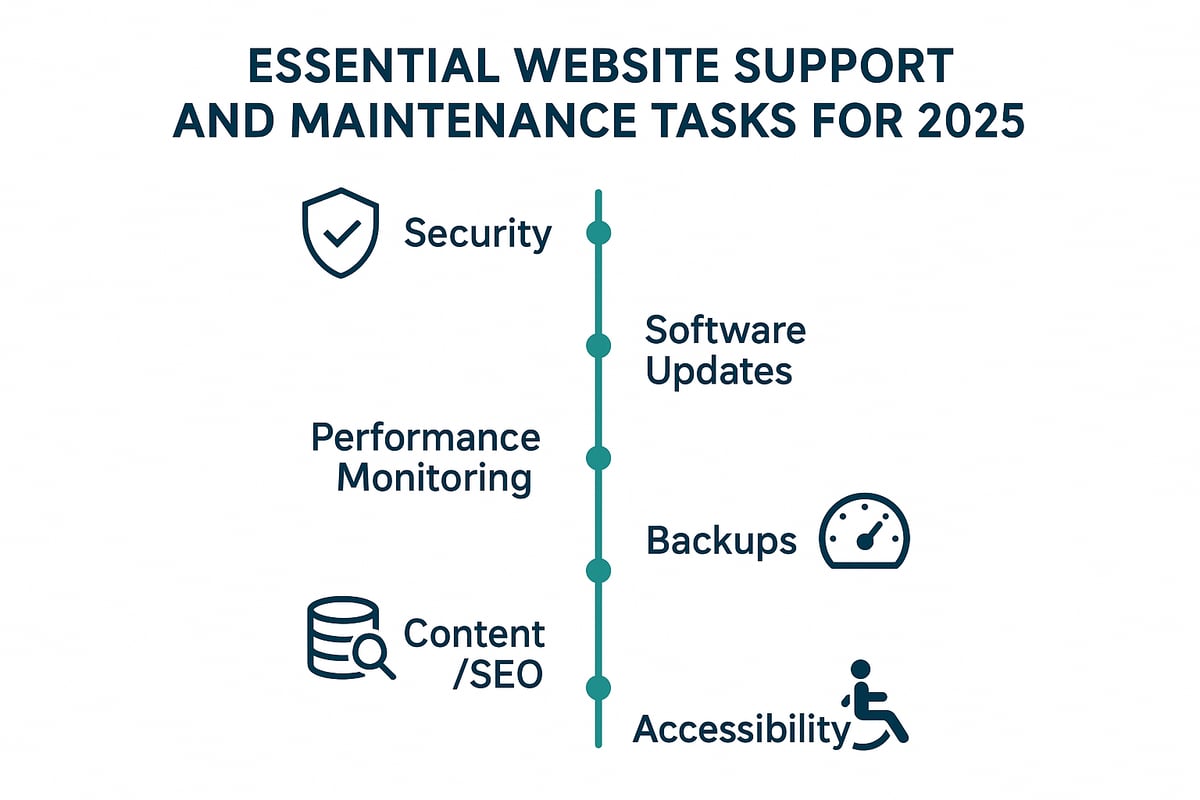
Managing a website in 2025 requires a comprehensive approach to support and maintenance. Businesses must address a range of tasks to keep their sites secure, high performing, and user friendly. Below, we outline the essential website support and maintenance services you should prioritise this year.
Security and vulnerability management
Security remains the cornerstone of effective website support and maintenance services. Regular security audits help identify vulnerabilities before attackers can exploit them. Automated malware scans, robust firewalls, and SSL certificates are non-negotiable for protecting sensitive data.
Businesses should set up automated alerts to flag suspicious activity instantly. The importance of proactive security is clear when you consider that 43% of cyberattacks target small businesses. Without regular attention, even a small breach can lead to significant losses.
A well-rounded security strategy also includes timely vulnerability patching and ongoing monitoring. By making security a continuous process, you reduce the risk of downtime, reputational damage, and lost revenue. Security should be the first item on your website support and maintenance services checklist.
Software, plugin, and core updates
Keeping your website’s software, plugins, and core systems up to date is essential. Outdated components are a common entry point for cyber threats and can destabilise your site.
Timely updates are a fundamental part of website support and maintenance services. Failing to update your CMS or plugins creates risks, as attackers often exploit known vulnerabilities. For example, vulnerabilities in WordPress plugins account for the majority of CMS-related hacks.
Schedule regular update checks and test changes in a staging environment before deploying them live. This approach ensures your site remains stable, secure, and compatible with the latest technologies.
Performance optimisation and monitoring
Website speed and reliability directly impact user experience and search rankings. Performance optimisation is a core aspect of website support and maintenance services in 2025.
Routine speed tests help identify bottlenecks. Optimising images, leveraging caching, and monitoring server response times are vital strategies. Google’s Core Web Vitals now play a significant role in SEO, making performance monitoring even more important.
Set up uptime monitoring tools to receive instant notifications if your site goes offline. Addressing performance issues proactively keeps visitors engaged and supports your business goals.
Backup and disaster recovery planning
No website support and maintenance services plan is complete without robust backup and disaster recovery procedures. Automated daily or weekly backups protect your data against accidental loss, cyberattacks, or hardware failures.
Store backups offsite or in the cloud to ensure they remain accessible, even if your primary system is compromised. Regular disaster recovery drills help your team respond quickly and efficiently during real incidents.
Consider this: 93% of businesses without disaster recovery measures close within a year after a major data loss. Investing in reliable backup strategies safeguards your operations and reputation.
Content updates and SEO maintenance
Fresh, relevant content keeps your website competitive and engaging. Content updates are a vital part of website support and maintenance services. Regularly review your site to remove outdated information, correct broken links, and optimise for search engines.
Ongoing SEO audits identify opportunities for improvement and ensure compliance with the latest ranking factors. Updating meta tags, improving internal linking, and monitoring keyword performance can make a significant difference.
Staying proactive with content and SEO maintenance helps maintain visibility, attract traffic, and drive conversions.
User experience and accessibility enhancements
User experience and accessibility are increasingly prioritised in website support and maintenance services. Conduct regular UX reviews to identify pain points and barriers to engagement.
Accessibility audits, guided by WCAG 2.2 standards, ensure your site is usable for all visitors, including those with disabilities. Compliance is not only a legal requirement but also a competitive advantage. In 2025, 71% of users will leave a site if it is not accessible.
By making continuous improvements to usability and accessibility, you foster trust, broaden your audience, and support long-term business growth.
How to choose the right website support and maintenance provider
Choosing the right website support and maintenance services provider is a crucial decision for any business. The quality of support you receive will directly impact your website’s performance, security, and long-term growth. With so many options available in 2025, a structured approach is essential to ensure your business’s digital presence remains robust and resilient.
Assessing your website’s unique needs
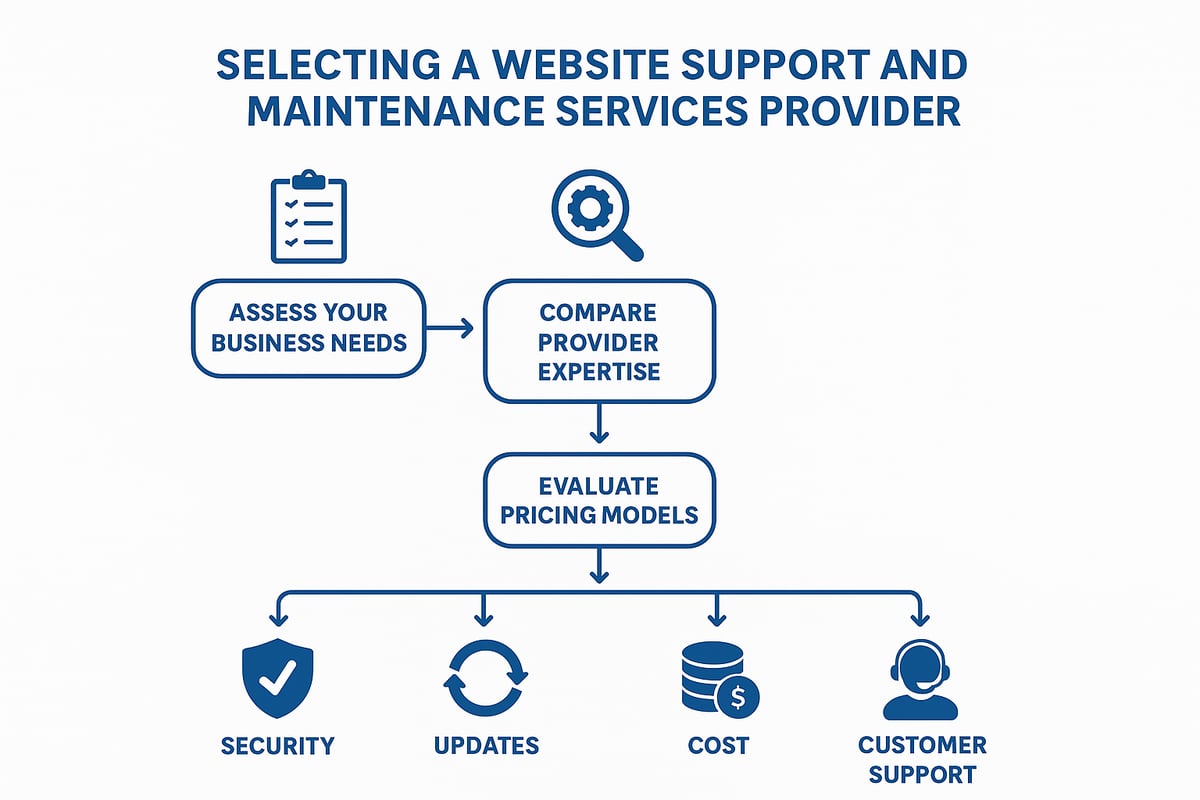
Begin by evaluating your business goals and how they relate to your website’s function. Is your site primarily informational, or does it handle transactions, bookings, or memberships? Consider the volume of traffic, the complexity of your web platform, and any industry-specific compliance requirements.
For example, e-commerce businesses often require more advanced website support and maintenance services due to higher security risks and the need for rapid response to downtime. A thorough needs assessment will help you define the scope of services required and guide your provider selection.
Key criteria for evaluating service providers
When comparing providers, look for proven expertise, relevant certifications, and a strong track record in delivering website support and maintenance services. Review the range of services on offer, from routine updates to emergency response, and ensure they can tailor solutions to your site’s unique requirements.
A reputable provider should offer clear service level agreements, flexible support channels, and transparent reporting. For deeper insights into what robust maintenance should include, consult website maintenance best practices to benchmark what leading providers deliver.
Understanding pricing models and contracts
Pricing for website support and maintenance services varies significantly. Some providers offer fixed monthly packages, while others use pay-as-you-go or ad-hoc pricing. Examine what is included in each contract, such as response times, types of incidents covered, and any limits on support hours.
Transparency and flexibility are vital. Ensure you understand all terms before committing, and look for the ability to scale services as your business grows or your website evolves.
Questions to ask potential providers
Prepare a list of questions to assess each provider’s processes and reliability. Key examples include:
- How do you handle urgent incidents?
- What is your typical response and resolution time?
- How often do you perform updates and backups?
- Can you provide regular reports and proactive updates?
- What is the escalation path in case of critical issues?
Clear, consistent communication is a sign of a trustworthy website support and maintenance services partner.
Red flags and pitfalls to avoid
Be wary of providers who overpromise or lack transparency about their processes. A lack of clear escalation paths or inadequate backup policies can leave your business vulnerable.
For instance, some businesses have suffered significant data loss due to poor disaster recovery planning. Always verify a provider’s backup and restore procedures before signing any agreement for website support and maintenance services.
WPCTO: expert WordPress support for your business
WPCTO delivers tailored WordPress website support and maintenance services for businesses and agencies. Their offerings include rapid fixes, proactive security, and strategic consultancy designed to maximise your site’s reliability and performance.
By partnering with a specialist like WPCTO, you gain peace of mind knowing your website is in expert hands.
Latest trends and technologies in website support and maintenance for 2025
Staying ahead of the curve is essential for anyone investing in website support and maintenance services. In 2025, new technologies and best practices are transforming how websites remain secure, optimised, and compliant.
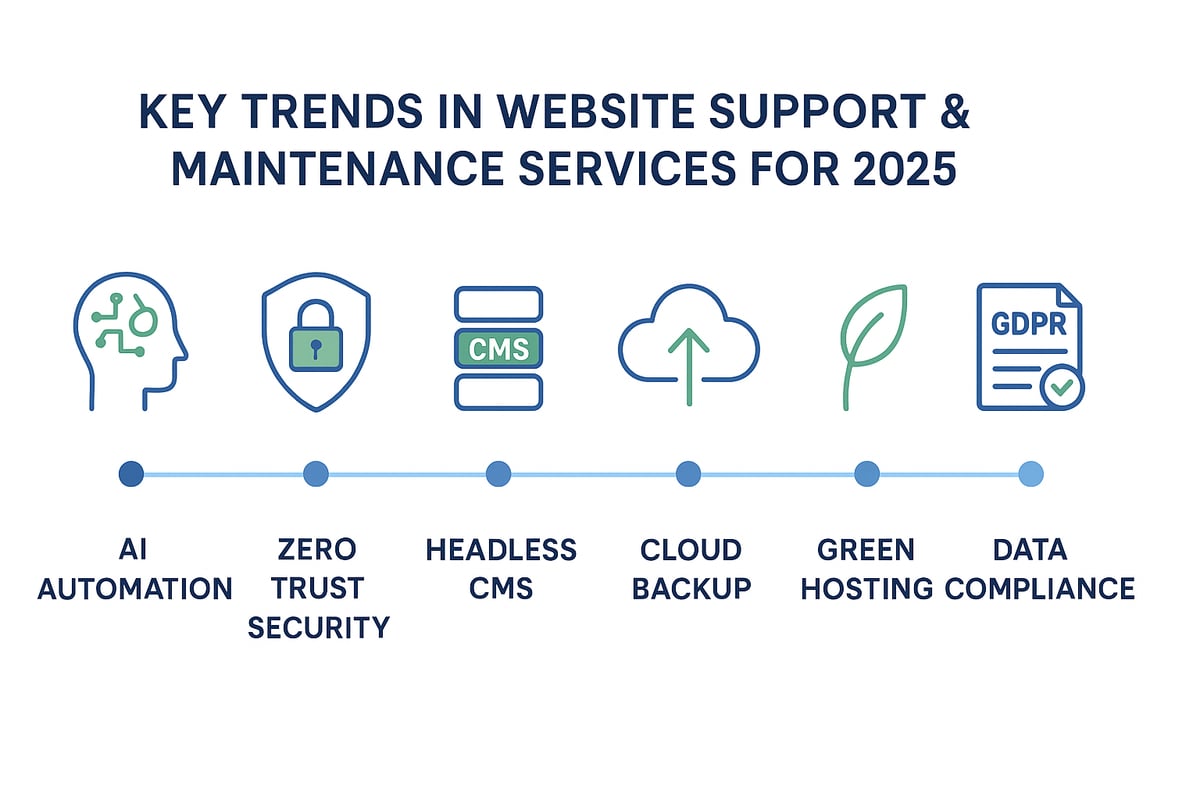
From AI-powered automation to sustainable hosting, it is crucial to understand these trends to make informed decisions. Let us explore the key developments shaping website support and maintenance services this year.
AI-driven monitoring and automation
Artificial intelligence is redefining website support and maintenance services. Automated threat detection now scans for vulnerabilities in real time, identifying suspicious activity before it escalates. Machine learning analyses website data to predict and prevent outages, ensuring smoother performance.
AI-driven tools also streamline routine tasks, such as patching software, monitoring uptime, and automating incident responses. According to Gartner, AI-based solutions have reduced incident response times by 60% in the past year. For those managing WordPress sites, WordPress website support insights offer a practical look at how automation boosts reliability and efficiency.
Webmasters who integrate AI into their website support and maintenance services benefit from faster resolutions and fewer disruptions.
Proactive security and zero trust frameworks
The security landscape is rapidly evolving. Proactive security is now a core feature of website support and maintenance services, shifting the approach from reacting to threats to actively preventing them.
Zero trust frameworks are gaining traction. This model requires verification for every interaction, regardless of origin. By treating all users and devices as potential threats, zero trust significantly reduces the risk of breaches.
For organisations handling sensitive data, adopting these frameworks within website support and maintenance services ensures compliance and robust protection. Regular penetration testing and policy updates further strengthen defences.
Headless CMS and decoupled architectures
Headless CMSs are transforming digital experiences. By separating the backend from the frontend, these systems offer flexibility and scalability. Website support and maintenance services must now adapt to manage these complex, decoupled setups.
With headless WordPress adoption growing 35% year-on-year, maintenance teams face new challenges. These include managing APIs, securing multiple endpoints, and ensuring seamless updates across platforms.
For businesses seeking agility, integrating headless CMS within website support and maintenance services enables faster content delivery and easier integration with other digital tools.
Enhanced backup and disaster recovery solutions
Backup strategies are evolving to meet modern business needs. Website support and maintenance services in 2025 focus on real-time, incremental backups that minimise data loss.
Cloud and hybrid storage options are now standard. These solutions allow for rapid recovery and continuous access, even during major incidents. Regular disaster recovery drills are also essential, ensuring teams are prepared for any scenario.
By prioritising robust backup protocols within website support and maintenance services, businesses protect their data and maintain continuity in the face of unexpected events.
Sustainability and green hosting
Environmental responsibility is influencing technology choices. Many businesses now demand eco-friendly website support and maintenance services, with green hosting becoming a preferred option.
Sustainable hosting providers use renewable energy, efficient cooling systems, and carbon offset programmes. These initiatives reduce environmental impact while maintaining high performance standards.
With 70% of UK SMEs prioritising green IT in 2025, integrating sustainability into website support and maintenance services not only benefits the planet but also enhances brand reputation.
Increased focus on compliance and data privacy
Data privacy regulations are tightening. Website support and maintenance services must now include regular compliance audits and privacy impact assessments to meet GDPR, the UK Data Protection Act, and other emerging laws.
Maintaining compliance is not a one-time task. Ongoing monitoring, staff training, and transparent data handling processes are vital components. Failure to comply can result in hefty fines and loss of customer trust.
By embedding compliance into website support and maintenance services, businesses safeguard user data and maintain their reputation in a rapidly changing legal environment.
Step-by-step guide to implementing website support and maintenance in 2025
Implementing effective website support and maintenance services in 2025 requires a structured, strategic approach. By following a clear, step-by-step process, website owners can safeguard their digital assets, optimise performance, and ensure compliance with evolving industry standards. Let us walk through each step in detail.
Step 1: Audit your current website health
Begin by conducting a comprehensive audit of your website’s health. Evaluate technical aspects, security vulnerabilities, and overall performance. Use a combination of automated tools and manual reviews to gain a full picture.
Check for outdated software, weak passwords, slow loading times, and any existing security gaps. Identify broken links, missing updates, and accessibility issues. According to WPScan (2024), around 80% of vulnerabilities are discovered during these initial audits.
This audit forms the foundation for your website support and maintenance services, helping you prioritise areas that need immediate attention.
Step 2: Define your support and maintenance requirements
Next, clearly define your requirements for website support and maintenance services. Consider your business goals, critical website functions, and any compliance obligations specific to your industry.
Decide on the level of support needed, from emergency response times to the frequency of routine check-ups. Factor in the complexity of your website, expected traffic volumes, and any integrations with third-party services.
A well-defined set of requirements ensures your website support and maintenance services are aligned with your operational needs, reducing the risk of gaps or oversights.
Step 3: Select the right support model and provider
With requirements in hand, compare available support models. Options include in-house teams, freelancers, or specialist agencies. Assess each for expertise, scalability, and cost-effectiveness.
Evaluate providers based on their track record, certifications, and ability to customise website support and maintenance services for your business. Look for clear service level agreements (SLAs), transparent pricing, and strong client reviews.
Choosing the right partner for your website support and maintenance services is crucial for long-term reliability and growth.
Step 4: Establish processes and documentation
Create structured workflows for updates, backups, and incident response. Document each process thoroughly, including step-by-step instructions and escalation procedures.
Maintain a central repository for all documentation, such as change logs, audit results, and maintenance schedules. This ensures continuity if team members change and supports compliance audits.
Well-documented website support and maintenance services streamline operations, facilitate troubleshooting, and enhance accountability.
Step 5: Implement monitoring and reporting tools
Deploy robust monitoring solutions to track uptime, performance, and security. Set up tools that provide real-time alerts for downtime, suspicious activity, or declining performance metrics.
Establish regular reporting routines, sharing key insights with stakeholders. Use dashboards to visualise trends and identify recurring issues quickly.
Monitoring and reporting are integral to proactive website support and maintenance services, allowing you to address problems before they escalate.
Step 6: Schedule regular maintenance activities
Develop monthly and quarterly checklists for essential tasks: updates, backups, security scans, and content reviews. Assign responsibilities to specific team members or your chosen provider.
Track completion of each task to maintain accountability. Consistent scheduling minimises the risk of missed updates and unexpected downtime.
Notably, businesses without a disaster recovery plan face significant risks. In fact, 93% of businesses without disaster recovery close within a year after major data loss, highlighting the importance of this step within website support and maintenance services.
Step 7: Review and optimise continuously
Conduct quarterly reviews to assess the effectiveness of your website support and maintenance services. Analyse performance data, incident reports, and user feedback to identify areas for improvement.
Stay informed about the latest trends, tools, and regulations. Adjust your strategies in line with evolving best practices and technological advancements.
Continuous optimisation ensures your website support and maintenance services remain effective, secure, and future-ready.
Best practices for effective website support and maintenance
Staying ahead in 2025 requires more than the basics. To truly protect your digital assets and maintain growth, you need to adopt best practices for website support and maintenance services. These strategies ensure your site remains secure, high performing, and future ready.
Prioritise proactive over reactive maintenance
Proactive management is the cornerstone of effective website support and maintenance services. Rather than waiting for issues to surface, schedule routine audits, updates, and security scans. Automated monitoring tools can identify performance drops and vulnerabilities before they impact users.
Consider implementing regular checklists and monthly review cycles. These measures help reduce emergency incidents and minimise costly downtime. For example, studies show that proactive maintenance lowers the risk of critical failures by 40 percent. By focusing on prevention, you keep your website running smoothly and avoid the stress of last minute repairs.
Ensure robust security protocols
Security should be at the heart of all website support and maintenance services. Start with strong authentication methods, regular password updates, and multi factor authentication. Conduct frequent vulnerability scans to uncover potential risks. Patch all software and plugins promptly.
Deploy web application firewalls and SSL certificates to protect user data. Monitoring for suspicious activity is essential, especially for WordPress sites. For more targeted advice, visit Security for WordPress sites.
Remember, 60 percent of SMEs that suffer a cyberattack close within six months. Prioritising security is not optional, it is essential for business survival.
Maintain detailed documentation and change management
Accurate documentation underpins successful website support and maintenance services. Keep comprehensive records of all updates, patches, and incidents. Use a centralised log to track changes, ensuring every team member knows the site’s status.
Set up structured change management processes. Before making significant adjustments, outline the steps and expected outcomes. After changes, document what was done and why. This makes troubleshooting easier and supports compliance requirements.
Proper documentation also supports knowledge transfer. When staff change roles, new team members can quickly get up to speed, reducing the risk of errors or missed tasks.
Foster clear communication and transparency
Transparent communication is vital in website support and maintenance services. Establish clear channels for reporting issues and updates. Provide regular status reports to stakeholders, outlining ongoing tasks and recent changes.
Encourage open dialogue between technical teams and business leaders. This helps set realistic expectations and ensures everyone understands the priorities. In the event of an incident, timely updates keep all parties informed and reduce confusion.
Regular meetings, shared dashboards, and concise email summaries all support better collaboration. Clear communication builds trust and keeps your support processes running smoothly.
Invest in staff training and awareness
Your website support and maintenance services are only as strong as your team’s knowledge. Invest in ongoing training to keep staff updated on the latest security threats, tools, and compliance standards.
Schedule regular workshops and provide access to online courses. Encourage certifications in relevant technologies and frameworks. Well trained teams respond to incidents faster and are better equipped to handle complex challenges.
Promote a culture of continuous learning. When staff understand the importance of best practices, they are more likely to follow protocols and contribute to your website’s ongoing health.
Monitor performance and user feedback
Continuous monitoring is a key aspect of website support and maintenance services. Use analytics tools to track page speed, uptime, and user journeys. Identify bottlenecks and address them before they affect visitors.
Collect user feedback through surveys or on site forms. Analyse comments for trends that may indicate usability issues or feature gaps. Regularly reviewing this data enables you to make informed improvements.
Performance and user experience are closely linked. By monitoring both, you ensure your website remains competitive and meets evolving customer expectations.
Plan for scalability and future growth
Scalability is essential for modern website support and maintenance services. As your business grows, your website must handle increased traffic and new technologies. Assess your support model regularly to ensure it can scale with demand.
Prepare for future needs by choosing flexible hosting and modular systems. Automate repetitive tasks to free up resources for strategic work. Schedule periodic reviews to reassess requirements and adapt your approach.
By planning for growth, you ensure your website remains robust, secure, and responsive no matter how your business evolves.
After exploring the essential strategies and best practices for website support and maintenance in 2025, you can see just how much proactive care impacts your site’s security, performance, and growth. Whether you’re managing a business website or an e-commerce platform, staying ahead with expert help makes all the difference. If you’re ready to put these insights into action and ensure your WordPress site is always secure, fast, and reliable, let’s talk about how we can support your goals. Ready to transform your WordPress website?