

In 2025, the digital landscape is more competitive and security-focused than ever. Website maintenance has become a defining factor for businesses aiming to stand out and stay protected.
Did you know that 94% of first impressions are design related? Neglecting website maintenance can lead to slowdowns, security breaches, and lost sales, damaging your online reputation instantly.
This guide provides actionable checklists, expert tips, and future-ready strategies for website maintenance. Follow along to protect your site, boost performance, and secure your business’s online success in the year ahead.
What is Website Maintenance?
Website maintenance is the ongoing process of monitoring, updating, and optimising a website to ensure it performs at its best. This process includes technical, content, and user experience tasks, both proactive and reactive. For instance, regular plugin updates, fresh content, and uptime checks all fall under the umbrella of website maintenance. Sites that lack proper website maintenance risk downtime, data loss, and a decline in SEO performance. For those managing WordPress sites, following WordPress website management tips can help streamline essential maintenance routines and reduce risk.
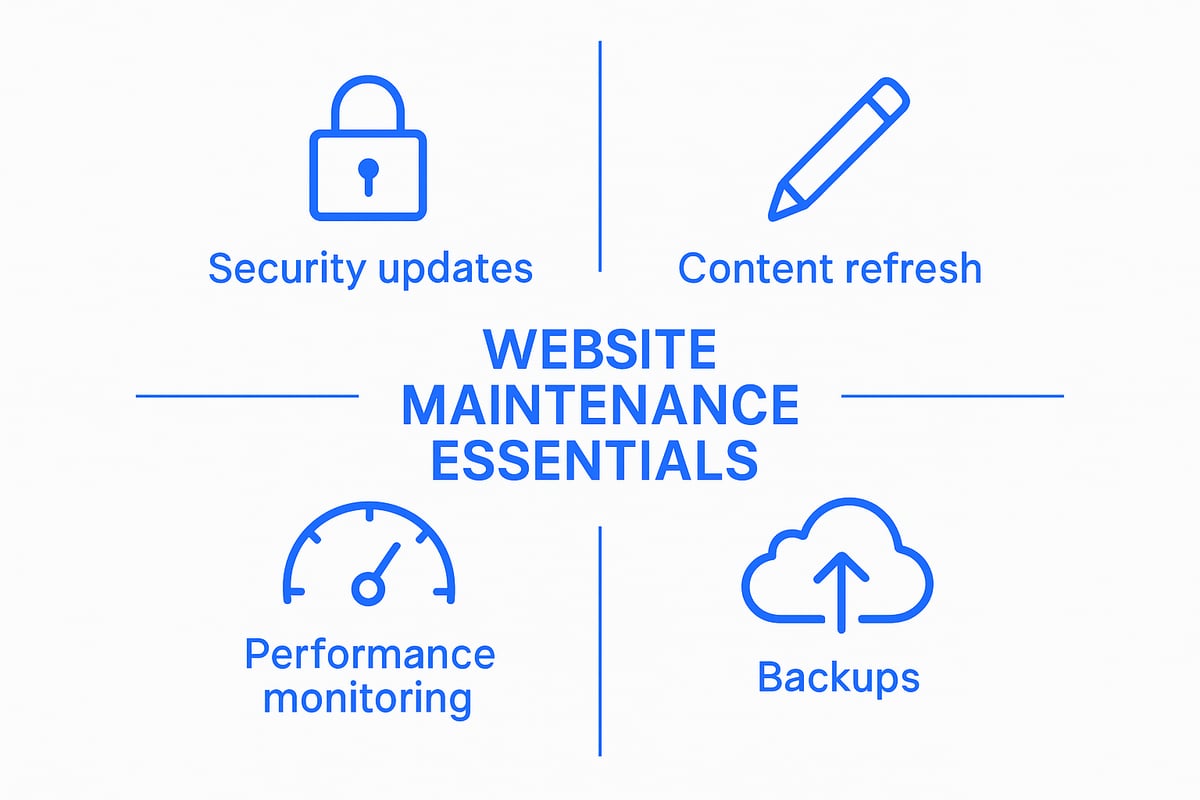
Defining Website Maintenance
Website maintenance means keeping your site secure, fast, and up to date. It is not a one-time task, but a continuous cycle involving many elements. These include reviewing software versions, checking site speed, updating content, and monitoring user interactions. Both proactive actions, like scheduled updates, and reactive responses, such as fixing bugs, are part of website maintenance. For example, updating plugins regularly and monitoring uptime are core tasks. Without website maintenance, websites are exposed to downtime, potential data loss, and negative SEO impacts.
Why Website Maintenance Matters in 2025
In 2025, user expectations and search engine standards are higher than ever. Security threats have become more advanced, making outdated websites vulnerable to attack. With 94% of first impressions tied to design, a neglected site can drive visitors away instantly. Website maintenance ensures your site remains secure, loads quickly, and meets Google’s latest requirements. Failing to invest in website maintenance can result in lost leads, reduced revenue, and damage to your brand’s reputation.
Key Components of Website Maintenance
The main components of website maintenance include security updates, content accuracy, and performance optimisation. Regular security patches protect against vulnerabilities. Content updates keep information accurate and engaging. Performance checks focus on speed and mobile responsiveness. Backups and disaster recovery plans safeguard data. Legal compliance, such as privacy and accessibility, is also crucial. For example, e-commerce sites need frequent product and security updates to protect customer data and maintain trust.
Types of Websites and Unique Maintenance Needs
Different websites have unique website maintenance requirements. Business sites prioritise uptime and brand consistency. E-commerce platforms require secure payment processing, constant uptime, and accurate product data. Blogs need fresh content and active moderation of comments. Corporate websites must ensure compliance and professional presentation. For instance, WooCommerce stores benefit from daily backups and routine testing of checkout processes to prevent sales disruption. Understanding your site’s specific website maintenance needs is key to long-term success.
The Business Impact of Website Maintenance
Website maintenance is far more than a technical chore; it is a vital engine driving your business’s success online. Every aspect of your site, from the first impression to the final checkout, is shaped by consistent upkeep. In this section, we’ll break down the business impact of website maintenance, showing how it safeguards your reputation, boosts visibility, protects data, drives conversions, and saves money in the long run.
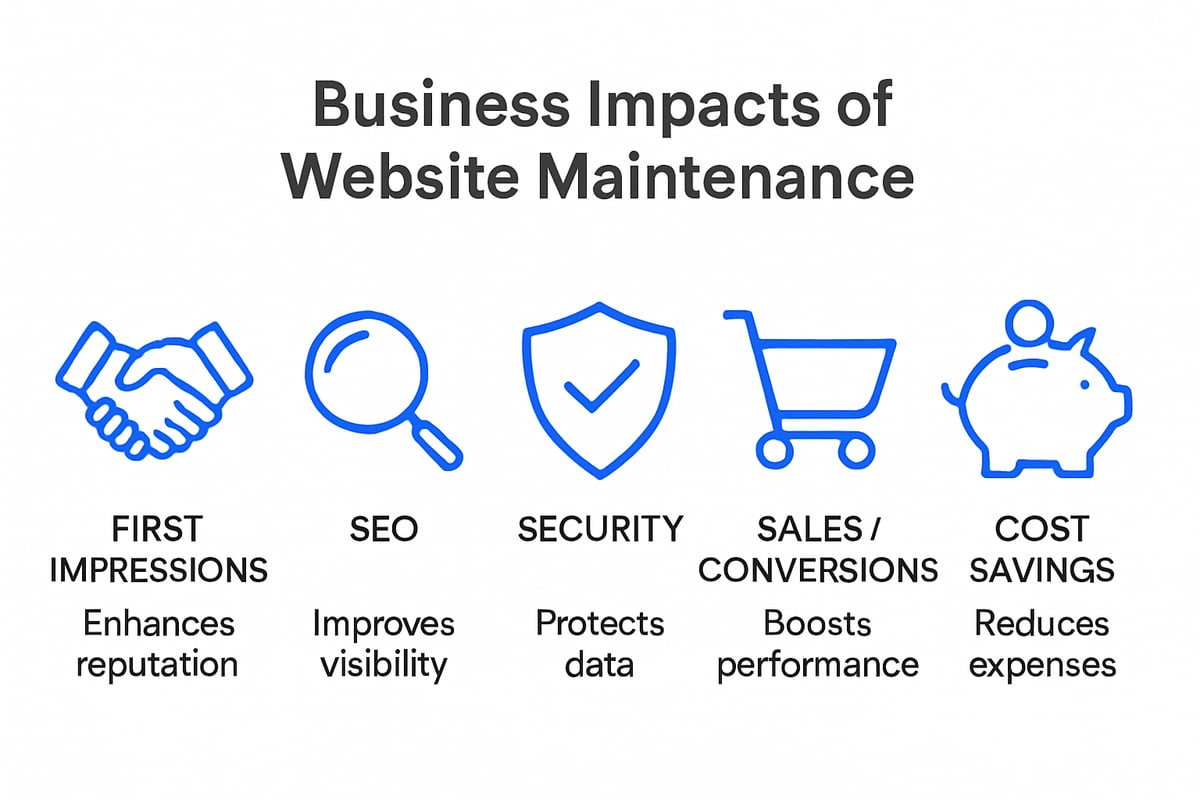
First Impressions and Brand Reputation
First impressions are made in seconds, and 94% relate directly to design and usability. Website maintenance ensures your site always looks its best, loads quickly, and functions smoothly. An outdated or broken website can erode trust instantly, sending potential customers elsewhere. Imagine a visitor encountering broken links or sluggish pages; they are unlikely to return or recommend your business.
Consistent website maintenance keeps your online presence professional and reliable. This attention to detail reassures users that your brand is trustworthy and invested in their experience. In today’s competitive market, maintaining a polished site is essential for building and retaining a positive reputation.
SEO Performance and Visibility
Website maintenance plays a crucial role in search engine rankings. Google prioritises fast, secure, and frequently updated sites. If your website suffers from broken links, outdated content, or technical errors, your rankings can slip quickly. Regular SEO audits and updates are essential for organic growth and visibility in search results.
For example, fixing 404 errors and updating meta tags can have a significant impact on your website’s visibility. With ongoing website maintenance, you ensure that your site remains aligned with the latest search engine standards, driving more qualified traffic and increasing your reach.
Security and Data Protection
Cybersecurity threats are evolving rapidly, making website maintenance critical for data protection. Regular updates and SSL renewals are not optional; they are your first line of defence against malware, hacking, and data breaches. For e-commerce sites, this is even more vital, as customer payment data must remain secure at all times.
Neglecting website maintenance can lead to compliance violations and costly legal penalties. Leveraging cybersecurity and security updates as part of your maintenance plan adds an essential layer of protection, helping you stay ahead of emerging threats and safeguarding your brand’s reputation.
Sales, Conversions, and User Experience
Technical issues such as checkout bugs or slow pages can immediately deter purchases. Website maintenance tackles these problems head-on by ensuring forms work, navigation is smooth, and content is always fresh. For online stores, high-quality images and accurate product information are non-negotiable.
By addressing these areas, website maintenance directly supports higher conversion rates and customer satisfaction. A seamless, trustworthy shopping experience keeps users engaged and encourages repeat business, strengthening your bottom line.
Cost Savings and Risk Mitigation
Investing in website maintenance is far more cost-effective than dealing with emergencies. Proactive upkeep prevents downtime, data loss, and security breaches, all of which can be expensive to resolve. For instance, regular backups minimise data loss after server failures, helping you recover quickly without major setbacks.
By prioritising website maintenance, you reduce the risk of unexpected expenses and protect your business from costly disruptions. In the long run, this consistent investment yields significant savings and peace of mind.
Essential Website Maintenance Tasks: A 2025 Checklist
Staying ahead in 2025 means having a robust website maintenance plan that addresses security, performance, and compliance. A well-maintained site not only performs better but also protects your business from unexpected risks. Below is a comprehensive checklist to ensure your website maintenance covers all the bases, maximising reliability and user trust.
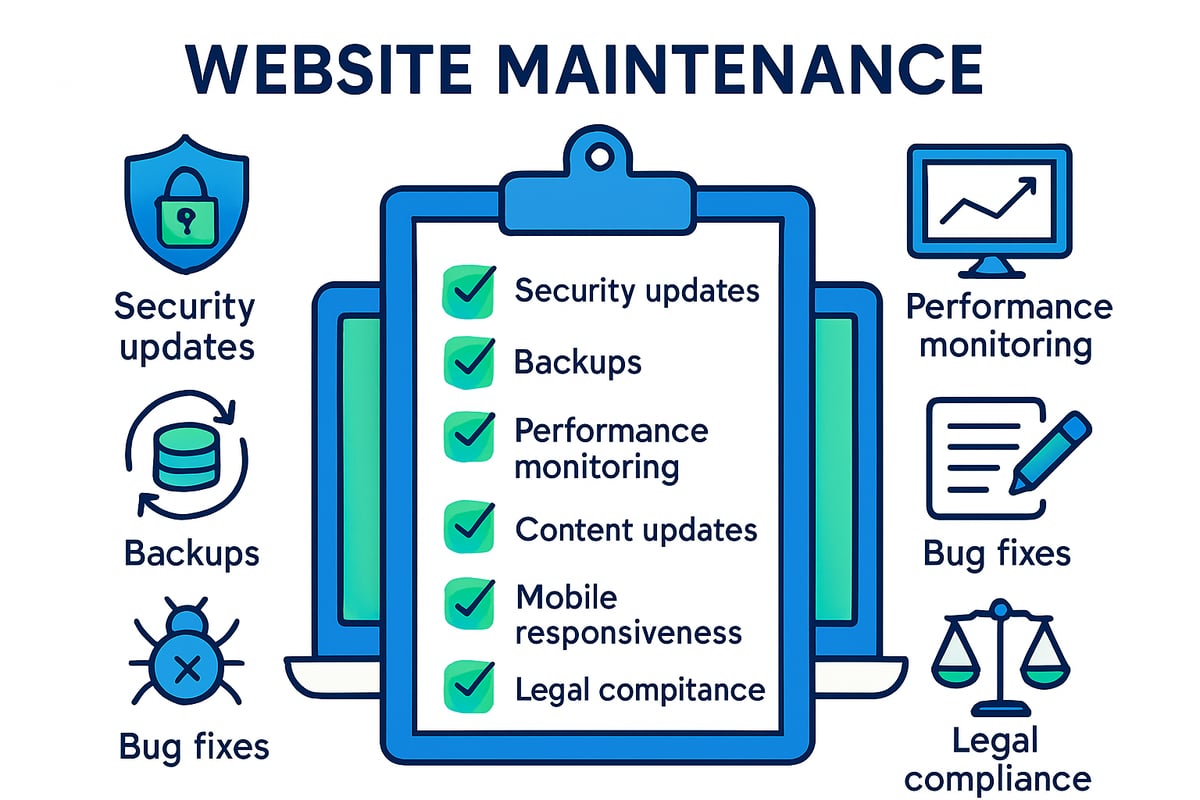
Security Updates and Vulnerability Patching
Keeping your website maintenance routine up to date starts with security. Threats evolve rapidly, and cybercriminals target outdated software.
Key steps include:
- Applying core software, plugin, and theme updates promptly
- Monitoring for new vulnerabilities through security feeds
- Using automated scanning tools to detect risks
- Reviewing server and database security
For example, WordPress users should update plugins weekly due to frequent exploits. Regular security updates are essential for preventing data breaches and keeping your reputation intact.
Backups and Disaster Recovery
A cornerstone of website maintenance is having a reliable backup and recovery plan. Backups protect your data against accidental loss, hacking, or server failure.
Best practices involve:
- Scheduling automated backups daily for active sites
- Storing copies offsite or in the cloud
- Testing backup restoration regularly to ensure reliability
E-commerce sites handling daily transactions should back up every day. Losing recent data can be catastrophic, so never underestimate the value of a solid backup system.
Performance Optimisation and Monitoring
Website maintenance must include regular performance checks. Speed and uptime directly influence user satisfaction and search rankings.
To optimise performance:
- Track page load times and server health
- Compress images and minify code
- Enable caching to reduce server load
- Use tools like Google PageSpeed Insights
Sites loading in under two seconds retain more visitors. Consistent monitoring ensures your site meets modern expectations and prevents slowdowns from impacting conversions.
Content Updates and Moderation
Content is at the heart of effective website maintenance. Outdated or incorrect information damages credibility and search engine rankings.
Maintain your site by:
- Refreshing old content and updating product details
- Adding new blog posts or resources
- Moderating user-generated content for quality and safety
Blogs benefit from weekly updates to boost SEO and engagement. Keeping content fresh signals to users and search engines that your site is active and trustworthy.
Broken Links, Bug Fixes, and Error Handling
A seamless user experience depends on thorough website maintenance, especially when it comes to fixing issues. Broken links and technical bugs frustrate visitors and harm SEO.
Key actions include:
- Scanning for and repairing broken links (404 errors)
- Testing all forms, checkout processes, and interactive features
- Implementing custom 404 pages to guide lost users
E-commerce sites, in particular, should test checkout flows regularly. For ongoing support with these issues, see Comprehensive WordPress support services.
Mobile Responsiveness and Accessibility
Modern website maintenance demands that your site works flawlessly across devices and is accessible to everyone. Over half of all web traffic is mobile, making responsiveness critical.
Best practices:
- Test layouts on various devices and browsers
- Ensure compliance with WCAG accessibility standards
- Add alt text, keyboard navigation, and readable fonts
Inaccessible sites risk legal challenges and alienate potential users. Regular checks guarantee a positive experience for all visitors.
Legal Compliance and Privacy Updates
Website maintenance in 2025 must prioritise legal compliance. Regulations like GDPR and CCPA require transparency and data protection.
Checklist for compliance:
- Update privacy policies and terms regularly
- Ensure cookie consent mechanisms are in place
- Review data collection and usage practices
Regular reviews keep your site legally compliant and build trust with your audience. Staying informed about legal changes is vital for long-term success.
Step-by-Step Website Maintenance Plan for 2025
A robust website maintenance strategy is essential for every site owner in 2025. Following a structured schedule not only minimises risks but also keeps your online presence secure, optimised, and aligned with your business goals.
Weekly Maintenance Tasks
Weekly website maintenance tasks form the backbone of ongoing site health. Begin by checking website uptime and server status to catch any unexpected outages quickly. Reviewing analytics helps spot unusual traffic patterns or errors early.
Moderate comments and user-generated content to prevent spam or inappropriate material, ensuring your site remains professional. Apply urgent software or plugin updates as soon as they are released. This proactive approach reduces vulnerabilities and keeps your site running smoothly.
For example, reviewing Google Analytics every week can highlight trends in user behaviour, helping you respond rapidly to emerging opportunities or issues.
Monthly Maintenance Tasks
Monthly website maintenance is crucial for deeper system checks and content oversight. Start by running a comprehensive site backup and, importantly, test your restoration process to confirm data integrity.
Audit your site for broken links and missing images, which can harm user experience and search rankings. Refresh your core content such as blogs and product pages to ensure relevance. Review and update SEO elements, including meta tags and keywords, to keep your site competitive.
Regular monthly SEO audits will help maintain or improve your rankings in search engine results, supporting long-term growth.
Quarterly Maintenance Tasks
Every quarter, conduct a thorough performance audit to assess speed, responsiveness, and overall user experience. Review your security protocols, ensuring all SSL certificates are up to date and that your security measures meet current standards.
Evaluate your site’s design and UX to identify areas for improvement. Test all forms, payment gateways, and third-party integrations to prevent any disruptions for your users.
Quarterly website maintenance can uncover navigation issues that impact conversions, allowing you to make informed decisions about design or functionality enhancements.
Annual Maintenance Tasks
Annual website maintenance is an opportunity for a comprehensive review. Conduct a full content audit, removing outdated pages and refreshing evergreen material. Renew your domain registration and hosting to avoid unexpected lapses.
Review all legal documents, ensuring compliance with the latest privacy and data protection regulations. Plan updates for new features or consider a site redesign to stay ahead of industry trends.
This yearly process ensures your website maintenance efforts align with evolving business objectives and keeps your site future-ready.
Tools and Resources for Efficient Maintenance
Leverage specialised tools to streamline website maintenance. Uptime monitors, backup plugins, and security scanners automate many routine checks. Project management platforms help schedule and track tasks, reducing the risk of oversight.
WordPress users can benefit from plugins like UpdraftPlus for automated backups and Wordfence for security. For troubleshooting, resources like Fixing common WordPress issues provide practical guidance on resolving frequent problems.
Maintain a detailed checklist to ensure every aspect of website maintenance is covered, making your workflow efficient and reliable.
WPCTO: Expert WordPress Maintenance & Support
If you prefer expert support, WPCTO delivers tailored WordPress website maintenance for businesses and agencies. Their services include proactive security updates, performance optimisation, regular backups, and compliance monitoring.
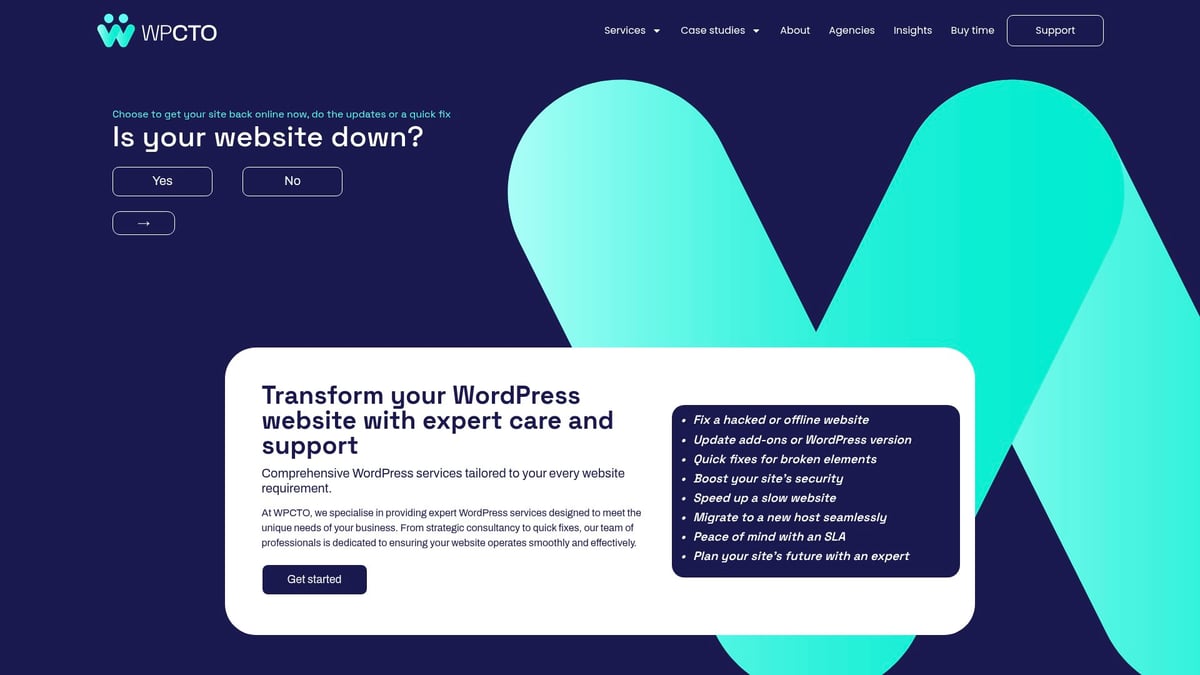
WPCTO offers flexible plans, from one-off fixes to comprehensive service-level agreements. Their team responds rapidly to emergencies while providing ongoing, strategic support.
Hundreds of clients rely on WPCTO for reliable website maintenance, emergency intervention, and growth consultancy. For those experiencing frequent WordPress issues, their expertise ensures your site remains secure, high-performing, and aligned with your goals.
Advanced Strategies and Future-Proofing Your Website
Staying ahead in website maintenance requires more than routine tasks. As technology and threats evolve, so must your approach. Here, we explore advanced strategies that not only safeguard your site but also position your business for long-term success.
Leveraging Automation and AI for Maintenance
Automation and AI are transforming website maintenance, making it more efficient and reliable. AI-powered security tools can detect threats in real time, instantly flagging vulnerabilities before they escalate. Automated content scheduling and updates reduce human error and free up resources for strategic tasks.
For example, an AI-driven monitoring tool can analyse user behaviour, spot anomalies, and recommend performance tweaks. Automation also supports predictive analytics, helping to anticipate issues before they arise. According to Maintenance statistics and trends to watch in 2025, predictive maintenance is becoming a critical trend for digital platforms. Embracing these technologies ensures your website maintenance stays ahead of potential risks.
Integrating Analytics and Data-Driven Decision Making
Data-driven website maintenance gives you a competitive edge. By leveraging analytics, you can identify underperforming pages, track conversion funnels, and understand user journeys more deeply.
Heatmaps, for example, reveal which sections attract the most attention, guiding design updates for better engagement. Regularly reviewing site metrics enables continuous improvement and more targeted optimisation. Implementing these practices within your website maintenance plan ensures every update is backed by evidence, not just intuition. This approach leads to measurable gains in user satisfaction and business outcomes.
Proactive Security: Beyond Basic Updates
Modern website maintenance demands a proactive stance on security. Beyond routine updates, consider deploying a Web Application Firewall (WAF) and DDoS protection to shield your site from evolving threats.
Regular penetration testing and vulnerability scans help uncover hidden risks. E-commerce businesses, in particular, require PCI compliance and advanced fraud detection to protect customer data. By integrating these security measures into your website maintenance, you reduce the likelihood of breaches and reinforce user trust. Staying vigilant is essential as cyber threats become more sophisticated each year.
Scalability and Infrastructure Planning
Website maintenance must account for growth and unpredictable traffic surges. Scalable hosting solutions allow your site to handle increased demand without performance dips. Content Delivery Networks (CDNs) distribute resources globally, ensuring fast load times for all users.
For example, planning for high-traffic events like Black Friday can prevent costly downtime. Regularly reviewing your infrastructure and bandwidth needs as part of website maintenance keeps your digital presence agile and future-ready. Proactive planning avoids emergencies and supports seamless user experiences.
Accessibility and Inclusive Design
Accessibility is a core component of responsible website maintenance. Ensuring your site meets WCAG 2.2 guidelines not only expands your audience but also reduces legal risk.
Regular testing with screen readers and assistive technologies ensures everyone can navigate your content. Simple steps like adding descriptive alt text and enabling keyboard navigation make a significant impact. By prioritising inclusive design in your website maintenance, you foster a positive reputation and demonstrate genuine commitment to all users.
Staying Ahead of Industry Trends and Regulations
Staying informed about evolving regulations and industry standards is vital for effective website maintenance. Privacy laws, SEO algorithms, and web technologies are always shifting.
Subscribe to industry news, attend webinars, and engage in professional forums to keep your knowledge current. For insights into how the market is evolving, the Website Maintenance Services Market Size, Outlook, Growth Statistics & Forecast 2033 report highlights growth drivers through the next decade. By anticipating change and adapting your website maintenance practices, you future-proof your site and maintain a strong competitive advantage.
You’ve now seen just how crucial regular website maintenance is for security, performance, and your business’s reputation. By staying proactive and following the best practices outlined here, you’re setting your WordPress site up for long term success in 2025 and beyond. But if you’d like expert guidance or want peace of mind knowing your site is always in top shape, you don’t have to do it alone. Ready to transform your WordPress website? Let’s work together to ensure your online presence is secure, optimised, and ready for whatever the future brings.