

Protecting your WordPress shop from cyber threats can feel like a daily concern for any UK e-commerce owner. Falling victim to one breach risks not just your reputation but also hefty penalties under UK data protection laws. A website security audit gives your business the expert insight needed to uncover hidden vulnerabilities and take action before cyber criminals strike. This guide shows you the value of thorough security checks and why regular audits are the foundation of a trusted online business.
Table of Contents
- Website Security Audits Explained Clearly
- Types Of Security Risks Facing WordPress
- How Website Security Audits Work
- Legal And Compliance Duties In The UK
- Real Consequences Of Neglecting Website Audits
Key Takeaways
| Point | Details |
|---|---|
| Regular Security Audits | Conduct quarterly security audits to proactively identify vulnerabilities and mitigate risks. |
| Understanding Digital Threats | Stay informed about the evolving landscape of cybersecurity threats, particularly for WordPress websites. |
| Legal Compliance | Ensure adherence to UK data protection laws to avoid substantial fines and protect customer information. |
| Consequences of Neglect | Failing to address security risks can lead to significant financial losses and reputational damage for businesses. |
Website Security Audits Explained Clearly
Website security audits represent a systematic and comprehensive examination of your WordPress site’s digital infrastructure, designed to identify potential vulnerabilities and assess cybersecurity risks. Cyber security experts recommend these strategic reviews as a proactive defence mechanism against potential digital threats that could compromise your business’s online presence.
A thorough website security audit typically involves multiple critical assessment stages:
- Comprehensive software vulnerability scanning
- Infrastructure and network configuration review
- User access permissions and authentication analysis
- Malware detection and potential breach point identification
- Performance and security configuration evaluation
Understanding the nuanced landscape of digital threats requires businesses to recognise that security is not a one-time event, but an ongoing process. WordPress websites, particularly those handling e-commerce transactions, demand consistent monitoring and strategic interventions to maintain robust digital defences.
Cyber risk assessment involves more than simply running automated scans. It requires a holistic approach that combines technological tools with expert human analysis. UK government cyber security research consistently highlights the importance of comprehensive, regular security evaluations to protect digital assets effectively.
Pro tip: Schedule quarterly security audits to stay ahead of emerging digital threats and maintain a proactive cybersecurity stance.
Here is a summary outlining how key website security audit components benefit businesses:
| Audit Component | Business Benefit | Risk If Omitted |
|---|---|---|
| Software vulnerability scanning | Prevents exploitation of flaws | Increased risk of hacking |
| User access analysis | Minimises unauthorised entry | Higher chance of data theft |
| Malware detection | Early threat identification | Prolonged undetected infections |
| Performance/security evaluation | Maintains site stability | Potential for performance drops |
Types Of Security Risks Facing WordPress
WordPress websites face a complex array of digital threats that can compromise business operations and customer data. WordPress vulnerabilities represent significant risks for e-commerce businesses, requiring constant vigilance and strategic protection mechanisms.
The most prevalent security risks in WordPress environments include:
- Malware infections targeting core website files
- Brute force login attempts
- Outdated plugin and theme vulnerabilities
- Cross-site scripting (XSS) attacks
- SQL injection vulnerabilities
- Distributed denial-of-service (DDoS) attacks
- Unpatched software security holes
Each of these threats presents unique challenges for WordPress site owners. Cybercriminals constantly evolve their attack strategies, developing increasingly sophisticated methods to exploit potential weaknesses in website infrastructure. Small and medium-sized businesses are particularly vulnerable, often lacking comprehensive cybersecurity resources to defend against these complex digital threats.

Understanding the technical mechanisms behind these risks is crucial for effective prevention. Different attack vectors require specific defensive strategies, from implementing robust authentication protocols to maintaining rigorous software update schedules. Top WordPress security risks demonstrate the importance of a multi-layered approach to digital security.
Pro tip: Implement automated security monitoring tools that provide real-time vulnerability detection and immediate threat alerts.
How Website Security Audits Work
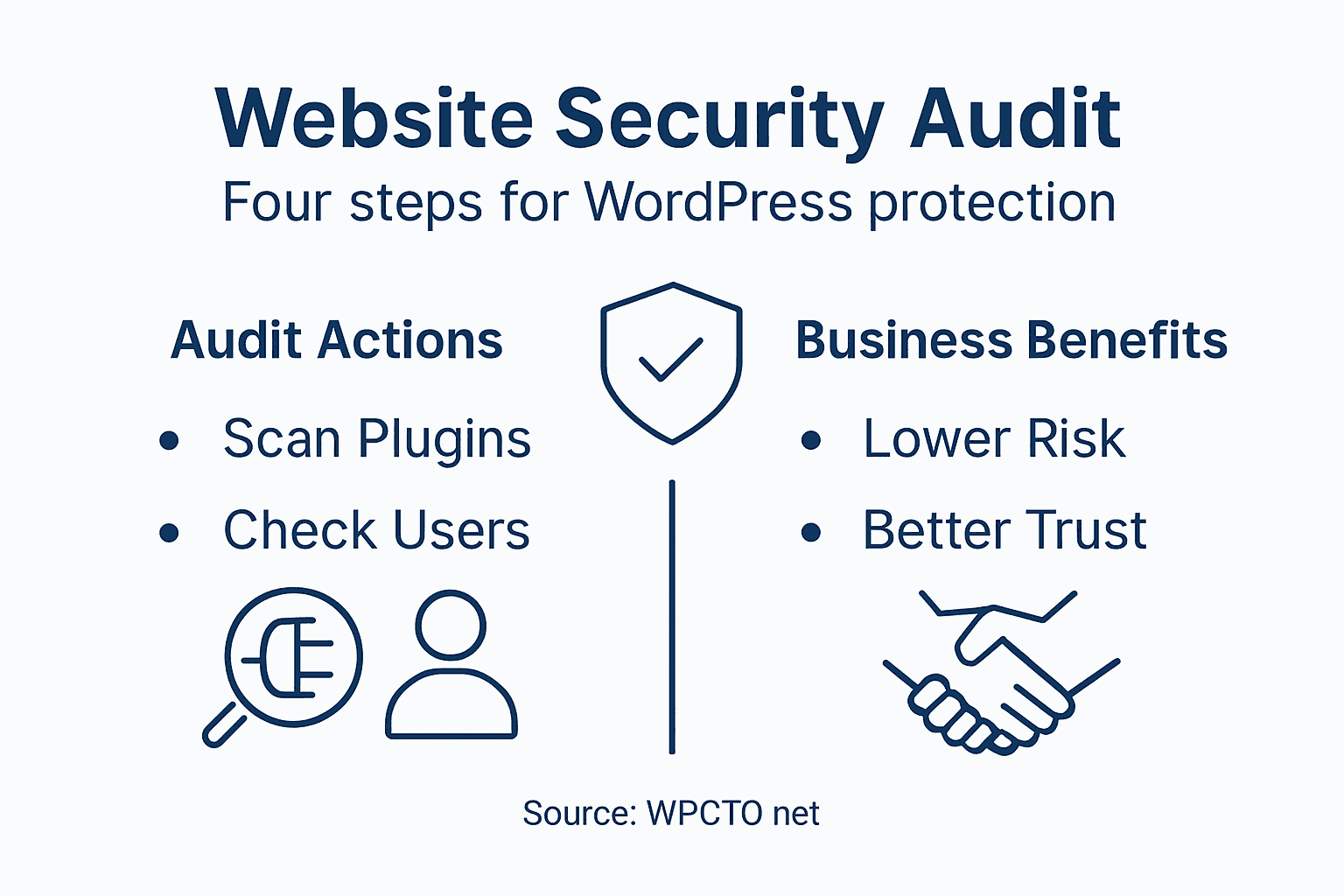
Website security audits represent a comprehensive diagnostic process designed to systematically evaluate and protect digital infrastructure. Cyber security standards outline a structured methodology for thoroughly examining potential vulnerabilities and security risks within WordPress environments.
A typical website security audit involves multiple critical investigation stages:
- Comprehensive vulnerability scanning
- Network and infrastructure configuration review
- Detailed penetration testing
- Authentication and access control assessment
- Malware detection and analysis
- Performance and security configuration evaluation
- Compliance and legal standard verification
Technical assessment requires meticulous examination of each website component, including plugins, themes, server configurations, and potential entry points for cyber threats. Skilled cybersecurity professionals employ both automated scanning tools and manual expert analysis to uncover hidden vulnerabilities that automated systems might miss.
Data protection audit frameworks emphasise the importance of not just identifying risks, but developing actionable recommendations for sustainable security improvements. This approach transforms a security audit from a simple diagnostic exercise into a strategic roadmap for digital protection.
Pro tip: Conduct security audits quarterly and immediately after any significant website changes to maintain robust digital defences.
Legal And Compliance Duties In The UK
UK businesses operating WordPress websites face substantial legal obligations regarding data protection and cybersecurity. Data protection laws mandate comprehensive security measures to safeguard customer information and prevent potential data breaches.
Key legal compliance requirements for WordPress websites include:
- Adherence to UK General Data Protection Regulation (GDPR)
- Implementation of robust data protection protocols
- Regular security vulnerability assessments
- Transparent privacy policy documentation
- Secure customer data management practices
- Prompt reporting of potential security incidents
- Maintaining comprehensive audit trails
Digital compliance represents more than a technical checkbox; it’s a fundamental business responsibility that carries significant legal and financial implications. Businesses failing to implement adequate security measures risk substantial financial penalties, with potential fines reaching up to £17.5 million or 4% of annual global turnover, whichever is higher.
Ecommerce compliance standards emphasise the critical nature of proactive security management. WordPress website owners must demonstrate a systematic approach to identifying, mitigating, and managing digital risks to maintain legal and regulatory conformity.
Pro tip: Consult with a legal professional specialising in digital compliance to ensure your WordPress website meets all current UK regulatory requirements.
Real Consequences Of Neglecting Website Audits
National audit research reveals that neglecting website security audits can trigger catastrophic business consequences far beyond simple technical vulnerabilities. WordPress website owners face multifaceted risks that extend well beyond immediate digital threats.
The potential consequences of overlooking security audits include:
- Substantial financial losses from data breaches
- Permanent reputational damage
- Complete operational shutdown
- Potential legal prosecution
- Loss of customer trust
- Significant compliance penalty fees
- Irretrievable business data destruction
Financial impact represents the most immediate and devastating consequence of security negligence. Cyber incidents can result in direct monetary losses, with UK businesses potentially facing fines up to £17.5 million or 4% of global turnover, alongside potential lawsuit expenses and recovery costs.
Cybersecurity disruption studies demonstrate that organisations experiencing prolonged digital security breaches can suffer catastrophic operational interruptions. These disruptions can compromise entire business ecosystems, rendering websites and critical digital infrastructure completely non-functional.
Pro tip: Document and quantify potential financial risks from security breaches to motivate proactive audit investments within your organisation.
The table below compares the impact of addressing versus ignoring WordPress security risks:
| Approach | Outcome for Business | Long-term Impact |
|---|---|---|
| Proactive audits | Enhanced digital resilience | Lower financial losses |
| Risk neglect | Greater vulnerability to attacks | Reputational and legal damage |
Secure Your WordPress Business with Expert Website Security Audits
The article highlights the crucial challenge of safeguarding your WordPress site from evolving cyber threats like malware infections and unauthorised access. If you recognise the risks of skipping detailed security audits, such as financial losses and reputational damage, you understand the importance of proactive vulnerability scanning and access control reviews. Protecting your business means acting on these key audit components before they become costly problems.
Take control of your WordPress website security today by partnering with WPCTO.net. Our professional service offers specialised WordPress website management and support designed to prevent risks identified in comprehensive audits. From quick security fixes to ongoing monitoring and strategic consulting, we provide trusted expertise that keeps your digital infrastructure resilient. Visit WPCTO.net now to secure your site and safeguard your business’s future.
Frequently Asked Questions
Why are website security audits important for WordPress businesses?
Website security audits are crucial for WordPress businesses as they help identify potential vulnerabilities and assess cybersecurity risks, protecting the business’s online presence from digital threats such as malware, data breaches, and hacking attempts.
What are the main components of a website security audit?
A typical website security audit includes software vulnerability scanning, network configuration review, user access analysis, malware detection, and performance evaluation, all aimed at identifying and mitigating security risks.
How often should I conduct a website security audit?
It is recommended to conduct website security audits quarterly and immediately after any significant changes to maintain robust digital defences and stay ahead of emerging threats.
What are the consequences of neglecting website security audits?
Neglecting website security audits can lead to severe consequences including substantial financial losses from data breaches, reputational damage, operational shutdowns, legal repercussions, and loss of customer trust, ultimately jeopardising the business’s longevity.
Recommended
- WordPress Security Hardening Guide for Secure E-commerce – WPCTO
- 7 Top WordPress Security Risks and How to Prevent Them – WPCTO
- How to Secure WordPress Site: Complete Protection Guide – WPCTO
- WordPress Security Checklist 2025: Protect Your Store Fast – WPCTO
- Marketing Audit: Unlocking Scalable B2B Revenue – Kadima